

With 2,300 species recorded in one year, I can hardly expect a biodiversity audit of my garden to compete with Great Dixter’s 6 acres. In a terrific online lecture for the Kew Mutual Improvement Society, the archaically named organisation run by Kew’s Diploma students, whose winter lecture series always contain some gems, head gardener Fergus Garrett reported on the findings of a Biodiversity Audit of the famous East Sussex garden covering the period 2017-2019.
He began by setting the scene for those like me who haven’t been to Great Dixter. With uplifting summer images he showed us the ‘show gardens’ near the house, the meadows rich in common spotted orchids and the coppiced woodlands. Lady’s mantle (Alchemilla mollis) and Mexican daisies (Erigeron karvinskianus) spill across limestone paving slabs and steps. Ribbons of ox-eye daisies (Leucanthemum vulgare) flow around the stock beds. Foaming cow parsley umbels are encouraged in some of the formal planted areas and roses tumble across buildings. A multi-layered system of plants co-exist creating a seemingly informal style of planting. Such an intensively planted garden requires careful management, but from the images I saw this is delivered with a light touch.
Pandemic permitting, I’m determined to get to Great Dixter this year. But Fergus Garrett’s enthusiasm has inspired more than a garden visit. The surprise finding from the Great Dixter audit is that the formal gardens are the most diverse, leading me to want to investigate how biodiverse my garden is. Of course January isn’t the ideal month to undertake such a project, but I’ve done a quick non-scientific mental audit, and have come up with a good number of species of creatures as well as native plants (in other words, weeds!).
Plants: without having to think about it too deeply, in most years you’ll find the following here:
- Green alkanet (Pentaglossis sempervirens)
- Hedge bindweed (Calystegia sepium)
- Spurge (Euphorbia peplus)
- Mind your own business (Soleiriolia soleiriolii)
- Herb Robert (Geranium robertianum)
The alleyway beside the house would probably yield a list twice as long of the weeds inhabiting the earth path and which I pull out when they become too tall, but otherwise tolerate. When I was studying for the RHS Level 2 Diploma a few years ago, that narrow strip was perfect for practising identification of most of the plants featured in the ident. test during weed week.


Creatures: here’s my quick list of vertebrates and invertebrates spotted in the garden over the last couple of years:
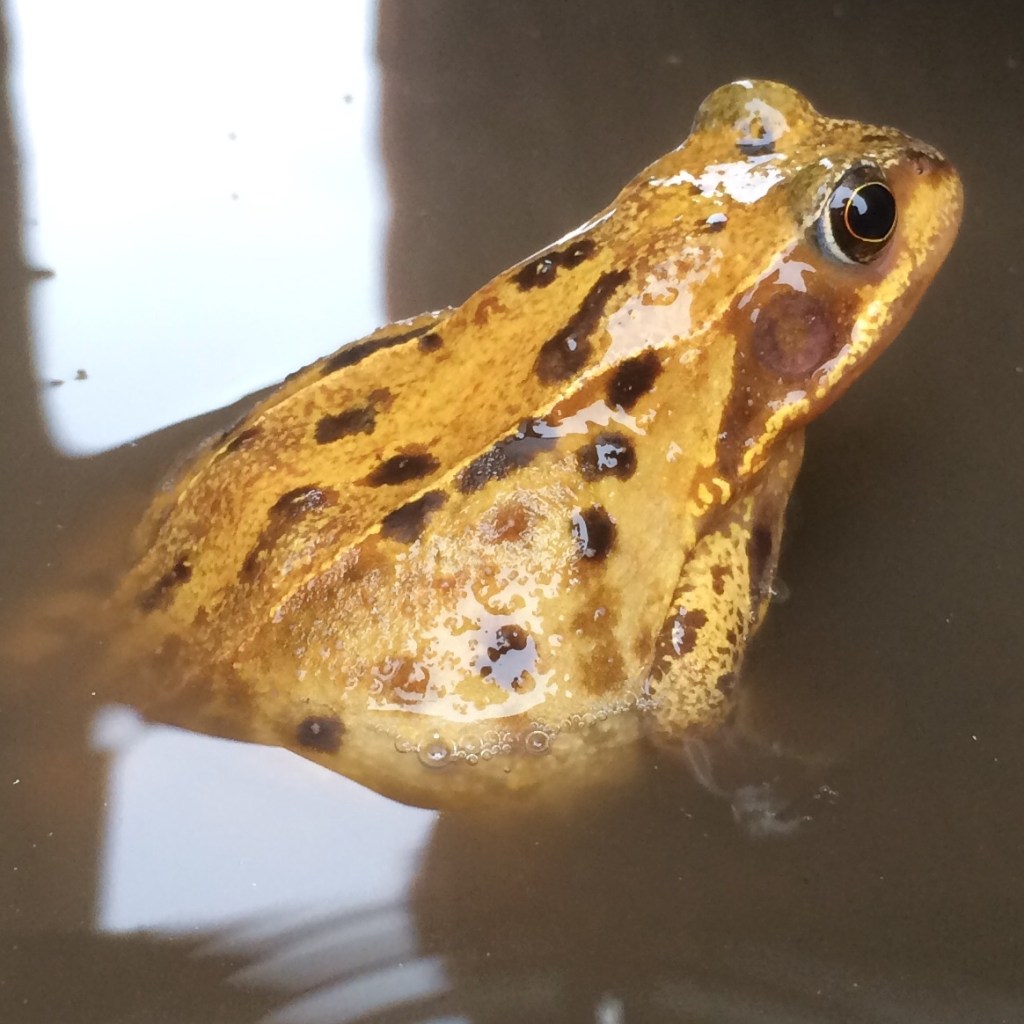
- Frogs. Last May I counted 11 frogs disporting themselves in the 150cm x 60cm pond. Their croaky chorus is an annual delight.

- Bees. In 2021 I want to learn to identify the different bee species that come to the garden. This looks like a handy field guide from the Field Studies Council: https://www.field-studies-council.org/shop/publications/bees-identification-guide/ Three years ago I remember sitting on the garden bench with my then four year old great nephew watching for several minutes as a leaf-cutter bee (Megachile species) methodically cut neat. semi-circular portions of leaf from a plant growing in a pot beside the bench. These solitary bees use the leaf pieces to build cells for their eggs. In a scene reminiscent of a David Attenborough documentary, on one of the bee’s return journeys from its nest it flew directly into an elaborate web spun by a stripey garden spider (Araneus diadematus?). The more the bee struggled to escape, the more entangled it became and we watched as the spider dashed across the web to its wrap its victim in a silken harness. Having secured its prey the spider went about its business. The following morning we checked to see if the bee had been able to free itself, only to find that the spider had eaten half of it. Thankfully the small person was unphased by this demonstration of ‘nature red in tooth and claw’.
- Scarlet lily beetles. Beastly in more ways than one! I didn’t claim this was a list of benign species only! I try to be as vigilant as I can in spotting these vivid red pests and their slimy brown ‘frass’ (poo, in which larvae are concealed), squishing the former and wiping off the latter from the stems of the pink oriental lilies that I’ve been growing in the same container for a few years now.
- Stag beetles. Sadly I found a dead beetle, like the upturned hull of a ship, lying on the yard last summer. I used to recoil from them in flight, I think due to their size, when they don’t seem much smaller than a wren. But having learnt more about their detritus-clearing activities I now recognise them as a force for good. One of Fergus Garrett’s initiatives at Great Dixter is the creation in the meadows and woodlands of ‘habitat piles’ made from shrub prunings from the garden. As gardeners we often feel compelled to over-tidy our gardens, clearing away leaf-litter and twiggy material which might shelter beneficial organisms. I’m gradually learning to leave pockets and corners of the garden undisturbed to allow ‘detritivores’ such as stag beetles to do the clearing for me.
- Bats. Until last summer I’d not seen bats gliding over the garden on hot summer nights for several years, but I’m happy to report that they came back in 2020. I love to watch them silently pursuing their airborne prey.
- Field mouse. Out of the corner of my eye I sometimes glimpse their tiny forms disappearing into corners and behind flower-pots. There was an old teak bedside cabinet in my old shed in which I kept bits and bobs such as old bulb packet labels etc. I once opened a drawer to find the cardboard shredded into minute strips and moulded into a cosy nest, the little family long dispersed.
- Butterflies. I spotted many butterflies in the garden last summer, including a peacock butterfly, although the photograph below right was actually taken in the Agius Evolution Garden in Kew on 14 July 2020. I see from the photo stream on my phone that I photographed this red admiral on the garden fence on 28 June 2020.


- Birds: according to the recorded clip on my ‘Chirp-o-matic’ app, it was a tawny owl’s eerie cry that I heard on the evening of 17 August 2020 as I stood at the back door. I feed the birds in my garden every day. After drawing the kitchen blinds and putting the kettle on to boil, it’s part of my morning ritual to put seed into the a feeder on the ground for blackbirds and robins and into the tray of a wooden hanging feeder. In the recent cold spell I defrosted the birdbath daily with a kettle full of boiling water. A birdbath provides fresh drinking water and an opportunity for the birds to bathe. They do this to dislodge parasites and trap moisture in their plumage which after a post-shower shake-out helps keep them warm. Last Sunday, an hour after it had started snowing, I glanced out of the window to see that something (robin or blackbird?) had washed and brushed up so vigorously that the recently defrosted dish was completely empty! This weekend’s Big Garden Birdwatch for the RSPB has been an opportunity to count the birds in my garden over a one hour period. Sadly this morning’s vigil for the BGB yielded only the usual suspects on this cold last day of January: two bedraggled feral pigeons and a forlorn wood pigeon. And a great tit systematically searching for grubs in the hazel tree in the garden behind mine.


Thank you Fergus Garrett for reminding me why I garden. Naturally I want to create a space which is visually attractive and pleasant to spend time in. But as you memorably expressed it in your talk we can also ‘blur edges between horticulture and ecology without compromising artistic merit’.
31 January 2021